
SEO Secrets Every Beginner Should KnowAĀ
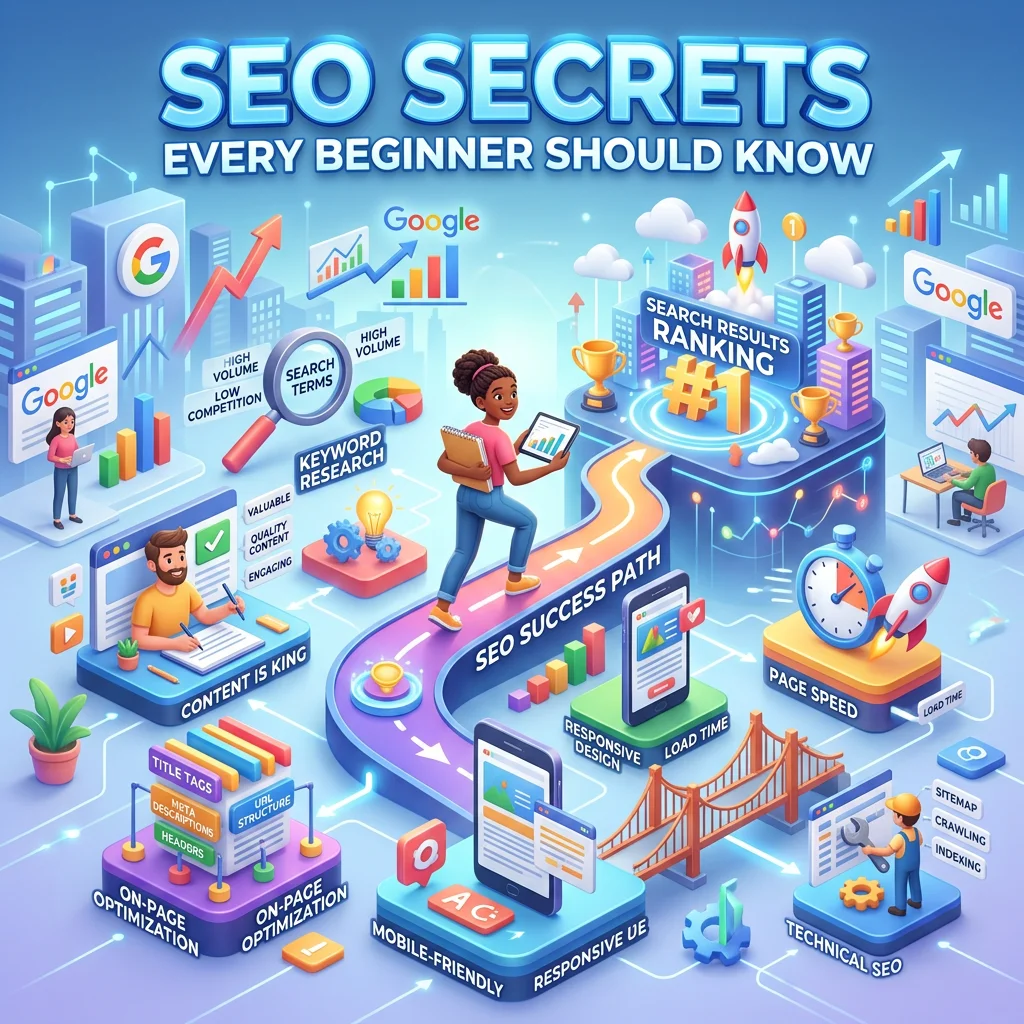
Introduction (SEO Secrets)
Have you ever searched for something on Google and wondered why some websites appear at the top while others are difficult to find? The answer often involves Search Engine Optimization, commonly known as SEO. It helps websites become more visible when people search for information, products, or services online.
Imagine opening a small shop in a busy city. Even if your products are excellent, people may not visit if they cannot find your shop. A website faces a similar challenge. SEO helps people discover your website when they are looking for something you offer.
The good news is that you do not need to be an expert to understand the basics of SEO. With the right approach, patience, and regular practice, beginners can learn how to improve a website’s visibility. Let’s explore some important SEO practices that every beginner should know.
1. Understand What SEO Really Means (SEO Secrets)
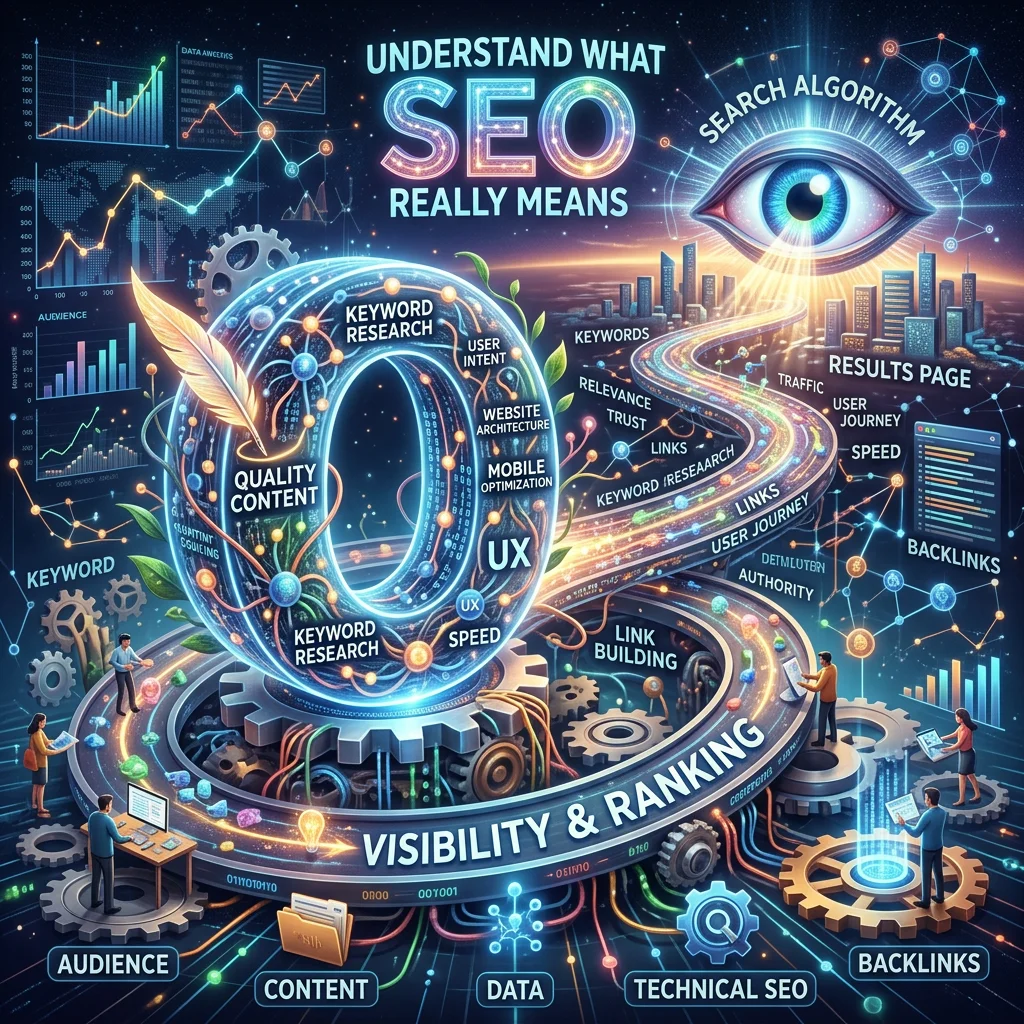
SEO is the process of improving a website so that search engines can understand its content and show it to people searching for relevant information.
For example, imagine someone searches for “easy chocolate cake recipe.” If you have a website about baking, well-organized content that answers this question may help your page appear in search results.
SEO is not simply about reaching the first position on Google. It is also about connecting the right information with the right audience.
There are three important areas to understand:
- On-page SEO: Improving elements on your website, such as titles, headings, content, and images.
- Off-page SEO: Building your website’s reputation through activities such as earning links from other relevant websites.
- Technical SEO: Helping search engines access, crawl, and understand your website.
Understanding these areas gives you a useful starting point for learning SEO.
2. Choose the Right Keywords (SEO Secrets)

Keywords are words and phrases that people type into search engines. Choosing relevant keywords helps you understand what your audience wants to find.
For example, a person looking for digital marketing lessons might search for “digital marketing for beginners” rather than simply typing “marketing.”
This difference matters because specific search phrases can reveal what people are interested in.
Before writing a blog, think about three questions:
- What is my audience searching for?
- What problem are they trying to solve?
- Does my content provide a helpful answer?
You can use tools such as Google Trends and Google Keyword Planner to explore search terms and discover related topics.
However, avoid adding the same keyword repeatedly just to attract search engines. Your writing should sound natural. Use your main keyword where it makes sense, including the title, introduction, and relevant headings.
Remember: Choose keywords that match your content instead of creating content simply to repeat popular search terms.
3. Write Content That Helps People (SEO Secrets)

One important SEO lesson is that useful content matters more than complicated words.
Imagine searching for an explanation of SEO and finding an article filled with technical terms that are difficult to understand. You might leave the page and look for another source.
Now imagine finding a blog that explains SEO through simple examples. You are more likely to continue reading because the information feels clear and relevant.
When creating content, focus on answering real questions. Explain ideas in your own words, include practical examples, and organize information into short paragraphs.
For instance, if you are writing about social media marketing, explain how a small bakery could use Instagram to introduce new products or communicate with customers.
Avoid writing only to make your article longer. Every section should give readers something useful.
Original ideas, personal observations, and relevant examples can make your content more distinctive. You should also check facts carefully and mention trustworthy sources when necessary.
4. Create Clear Titles and Headings (SEO Secrets)

Your blog title is often the first thing people notice in search results. A clear title helps readers understand what they can expect from your article.
Compare these two titles:
- “SEO Information”
- “SEO Secrets Every Beginner Should Know”
The second title gives readers a clearer idea of the article’s purpose and audience.
A good title should be relevant, easy to understand, and specific enough to describe the content. Avoid making promises that your article cannot deliver.
Headings are equally important. They divide your article into smaller sections, helping readers find information without reading every sentence.
For example, a blog about SEO might include headings such as:
- What Is SEO?
- How to Find Keywords
- Why Website Speed Matters
- Common SEO Mistakes to Avoid
Use a clear heading structure, with one main page heading and logical subheadings beneath it.
5. Make Your Website Easy to Use (SEO Secrets)

SEO is not only about words and keywords. The experience people have on your website also matters.
Think about the last time you visited a website that took too long to load. You may have left before seeing its content. Many visitors have the same reaction.
A website should load efficiently, work properly on mobile devices, and allow people to find information easily.
Here are a few things beginners can check:
Website speed: Compress large images and avoid unnecessary elements that slow down your pages.
Mobile friendliness: Make sure your content fits different screen sizes and that buttons are easy to use.
Simple navigation: Organize your pages so visitors can move between sections without confusion.
Readable design: Use comfortable font sizes, sufficient spacing, and clear headings.
If you use WordPress, you can review your website on a phone, tablet, and computer to see whether the layout works well on each device.
A website that is easy to use gives visitors a better experience and helps them access your content.
6. Do Not Ignore Image Optimization (SEO Secrets)

Images make a blog more interesting, but they should also be prepared properly for the web.
For example, imagine publishing an article about healthy breakfast ideas. Relevant photographs can help readers understand the recipes and make the page more engaging.
To improve image optimization, follow these practices:
- Use images that relate to your topic.
- Compress image files to reduce unnecessary file size.
- Give image files descriptive names.
- Add meaningful alternative text (alt text) when appropriate.
- Choose image dimensions that suit your website layout.
Alternative text helps explain an image’s content to people who use screen readers. It can also help search engines understand the image.
For example, instead of naming an image “IMG1234.jpg,” you could use a descriptive name such as “healthy-fruit-breakfast.jpg,” if that accurately describes the image.
Do not fill alt text with unrelated keywords. Describe the image clearly and naturally.
7. Use Internal Links Wisely (SEO Secrets)

Internal links connect one page of your website to another page on the same website.
Suppose you publish a blog about SEO and another about content marketing. You could link from the SEO article to the content marketing article when the second page provides useful additional information.
This gives readers an easy way to explore related topics. It also helps search engines discover other pages on your website.
When adding internal links, choose words that describe the destination. For example, “learn the basics of content marketing” is more informative than “click here.”
Make sure every link serves a purpose. Adding too many unrelated links can distract readers rather than help them.
8. Learn from Google Search Console (SEO Secrets)
One useful tool for beginners is Google Search Console. It helps website owners understand how their pages perform in Google Search.
After setting up and verifying your website, you can use Search Console to examine information such as search queries, clicks, impressions, and average search position.
For example, you might discover that your blog receives impressions for a topic but gets relatively few clicks. This could encourage you to review whether the title and description accurately communicate the value of the page.
You can also check whether Google has indexed important pages and investigate certain technical problems.
Remember that SEO improvements take time. Search positions can change, and not every page will perform equally well.
Instead of checking your rankings every hour, review your results regularly and look for meaningful patterns.
9. Avoid Common SEO Mistakes (SEO Secrets)
Beginners sometimes believe that using more keywords will automatically improve rankings. In reality, repeating keywords unnaturally can make content unpleasant to read and may violate Google’s spam policies.
Other mistakes include copying content from other websites, publishing thin articles with little value, ignoring mobile users, and buying links intended to manipulate search rankings.
Another common mistake is expecting immediate results. SEO is a gradual process, and there is no guaranteed method for reaching the first position on Google.
Focus on creating helpful content, maintaining your website, and following reliable SEO practices.
When something does not work as expected, treat it as an opportunity to learn rather than a reason to abandon the process.
Conclusion
Learning SEO does not have to be confusing. By understanding keywords, creating useful content, improving website usability, optimizing images, and monitoring performance, beginners can build a strong foundation.
The most important lesson is to remember the people behind every search. They are looking for answers, solutions, ideas, or products that meet their needs.
As a digital marketing student, you can begin by applying these techniques to your own portfolio website. Choose a topic, research what people want to know, write a helpful article, and review its performance over time.
You will not master everything in a day, and that is perfectly fine. Every page you improve and every result you study can teach you something valuable.
Good SEO is not about tricking search engines. It is about helping the right people discover content that genuinely deserves their attention.SEO Secrets Every Beginner Should Knowhttps://www.mysearchglobalrewards.com/blog-details/SEO-Secrets-Increase-Your-Online-Presence-with-These-Tips
contactCONTACT