
How to Build Customer Trust Online
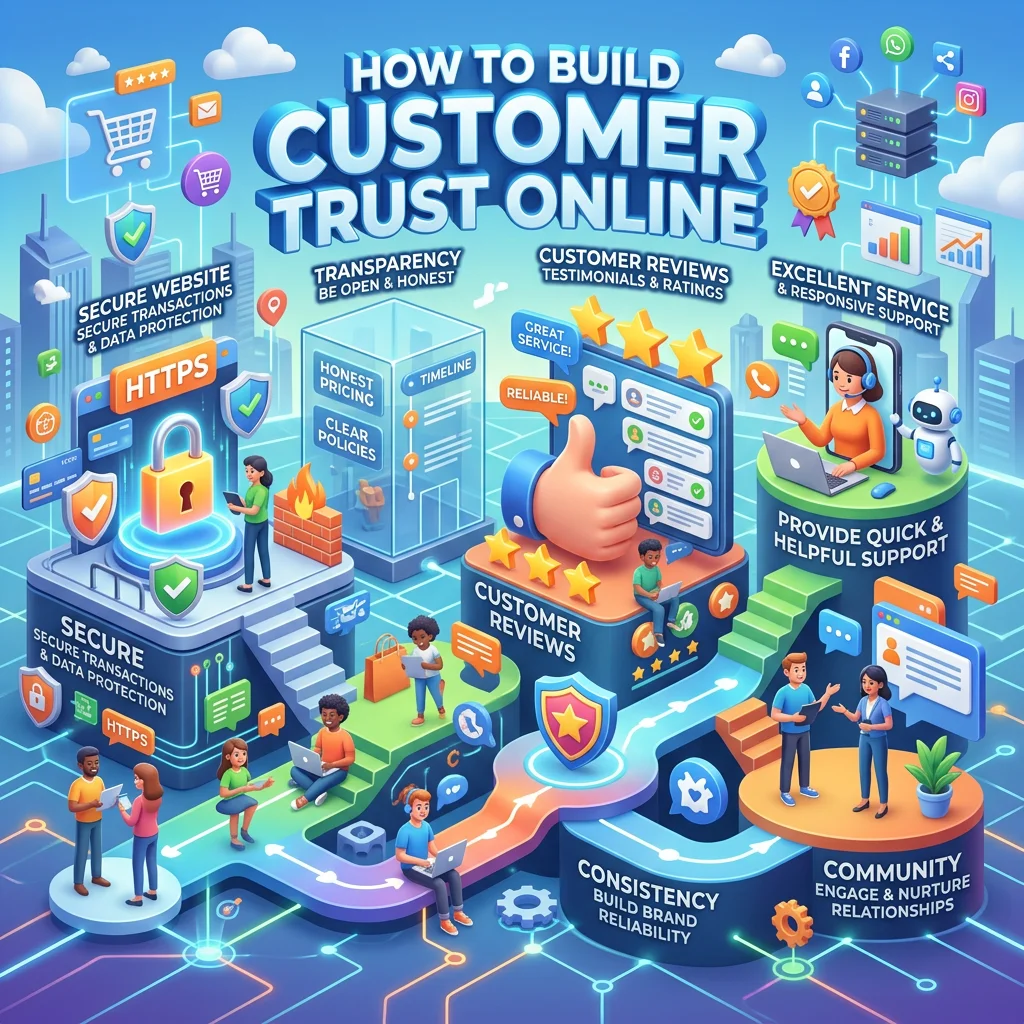
Introduction ( Customer Trust)
Getting people to visit a website is a good start, but making them trust a business takes more effort. People usually want to know who they are buying from, whether a product suits their needs, and if the business can deliver what it promises. Digital marketing helps businesses answer these questions and build relationships with potential customers.
Imagine a small bakery that makes birthday cakes. Someone might discover its Instagram page, look at the cake designs, visit the website, and check customer reviews before placing an order. Each step helps that person decide whether the bakery is the right choice.
This shows why digital marketing is not only about getting clicks. It is also about giving people enough confidence to take the next step.
1. Understand What Your Customers Need ( Customer Trust)
Good marketing starts with understanding people. Before promoting a product or service, a business should think about the problems customers want to solve and the information they need before making a decision.
For example, parents ordering a birthday cake may want an attractive design, a suitable flavour, and a reasonable price. Someone ordering a cake for an office celebration may care more about delivery times and serving size.
These customers are looking for different things, even though they are interested in the same product.
Businesses can learn about their audiences by reading reviews, answering questions, checking customer feedback, and observing which products receive the most attention. This information helps them create messages that feel relevant instead of showing the same advertisement to everyone.
When customers feel that a business understands their needs, they have a stronger reason to explore its products.
2. Make Your Website Easy to Find ( Customer Trust)
Search Engine Optimisation (SEO) helps people discover a website when they search for information, products, or services online.
Think about someone searching for a birthday cake in their neighbourhood. They might type phrases such as “birthday cakes near me” or “custom chocolate cakes.” A bakery that provides useful, relevant information about these products has a better opportunity to appear in suitable search results.
Choosing relevant keywords is one part of SEO, but the content must also help visitors. Use clear headings, explain products properly, and organise information so people can find what they need without confusion.
Website speed and mobile-friendly design also matter. If a page takes too long to load or looks difficult to use on a phone, visitors may leave before discovering what the business offers.
SEO does not produce guaranteed results overnight. Regular improvements, helpful content, and accurate business information can support long-term visibility.
3. Share Content That Helps People
Content marketing gives businesses a way to answer questions and demonstrate what they know. It includes blog posts, videos, photographs, guides, and other useful material.
A bakery could publish a simple guide about choosing the right cake size for a birthday party. It could also share decorating videos, explain different flavours, and show examples of completed orders.
This information helps customers make decisions without feeling pressured to buy immediately.
The same idea applies to other businesses. A digital marketing agency might publish beginner-friendly SEO tips, while a web designer could explain what makes a website easy to navigate.
Useful content should have a clear purpose. Instead of creating posts simply to fill a calendar, businesses should focus on questions their audiences genuinely want answered.
When people repeatedly find helpful information, they may become more familiar with the business and feel more confident about contacting it.
4. Build Relationships Through Social Media ( Customer Trust)
Social media gives businesses an opportunity to communicate directly with people. Platforms such as Instagram and Facebook can help them share updates, answer questions, introduce products, and show the people behind their work.
For example, the bakery could post photographs of recent cakes, share short videos of the decorating process, and answer questions about ingredients or delivery.
However, posting attractive pictures is only one part of social media marketing. Communication matters just as much.
Imagine a customer asking about an egg-free cake. A clear, honest response is more useful than a generic reply that does not address the question. If the bakery cannot guarantee that a product is suitable for a particular dietary requirement, it should explain that honestly.
Businesses do not need to be active on every platform. Starting with one or two suitable channels and managing them consistently is often more practical.
Social media works best when businesses listen to their audiences, respond thoughtfully, and share content that offers genuine value.
5. Use Google Ads With a Clear Goal ( Customer Trust)
Google Ads allows businesses to promote their products or services through paid advertising. It can help them reach people who are searching for relevant information or products.
For example, a bakery might run an advertisement for custom birthday cakes. Someone searching for that service may already be considering an order, making the advertisement relevant to their needs.
However, paying for clicks does not automatically lead to sales. The advertisement must match what customers are searching for, and the webpage they visit should provide the information they expect.
If an advertisement promises affordable birthday cakes but leads to a page with no prices or clear ordering instructions, visitors may leave.
Businesses should select relevant keywords, write straightforward advertisements, set a manageable budget, and review performance regularly. They should also avoid spending money on searches that have little connection to their products.
The aim is not simply to attract more visitors. It is to attract people who are genuinely interested in what the business offers.
6. Make the Buying Process Simple ( Customer Trust)
Even interested customers may leave a website if taking the next step feels difficult. Conversion optimisation focuses on improving the experience so visitors can complete useful actions more easily.
A conversion could be placing an order, submitting an enquiry, booking an appointment, or signing up for updates.
Consider the bakery’s ordering process. If customers have to search through several pages to find prices or struggle with a complicated form, they may decide not to continue.
A better experience might include clear product photographs, understandable prices, delivery details, and a simple way to contact the bakery.
Buttons should explain what happens next. For example, “View Cakes” or “Place an Order” is clearer than a vague button that gives visitors little information.
Customer reviews and genuine testimonials can also help people understand what to expect. Businesses should display feedback honestly and obtain permission before publishing identifiable customer content.
Small improvements can make the experience easier and help visitors feel more comfortable taking action.
7. Learn From Marketing Results ( Customer Trust)
Digital marketing provides information that businesses can use to understand what is working and what needs improvement.
Website traffic shows how many people visit a site. Click-through rate measures how often people click after seeing a search result or advertisement. Conversion rate indicates the share of visitors who complete a chosen action.
Cost per conversion helps businesses understand how much they spend, on average, to generate an action they value.
These measurements are more useful when considered together. A website might attract many visitors but receive very few enquiries. In that situation, the business could investigate whether its content answers customer questions, whether its prices are clear, or whether its contact process is too complicated.
Tools such as Google Analytics can help businesses study website activity. However, collecting numbers is not enough. The important step is understanding what the information suggests and deciding what to improve.
Businesses should also respect customer privacy and use data responsibly.
Conclusion ( Customer Trust)
Building customer trust online takes more than attractive advertisements or a large number of website visits. People need useful information, honest communication, and a straightforward experience before they feel comfortable choosing a business.
SEO helps people discover a website. Content marketing answers their questions, while social media creates opportunities for conversation. Google Ads can bring relevant visitors, and website improvements can make it easier for those visitors to take action.
As a digital marketing student, I am learning that these methods work best when they support one another. A successful strategy is not simply about getting attention; it is about understanding people and helping them make informed decisions.
Every visitor arrives with a different question or expectation. When businesses take those needs seriously, they can create better online experiences and build relationships that extend beyond a single click.
contactCONTACT